Spontaneous Problem: Name things that close.
Boundary Breaker: You have been given a big ALERT project to work on with a partner. What are three characteristics you would want in the partner you choose. Explain your choices.
This morning we finished our final edits to our research and crafted our artifacts! Students who did not complete research projects looked at the Habit of Mind "Questioning and Posing Problems" with our mystery box activity. We discussed quality questioning and narrowing a larger category with general questions rather than specific ones.
Together we read Round Trip by Ann Jonas to highlight creative and flexible thinking. The book is original in that each page tells two stories, one right-side up, and one upside-down!
In our math unit, students competed to build the largest two digit number in our game Card Capers. Students had a tens space and ones space to fill as well as a discard space. When a 0-9 card was turned, they placed the digits one at a time in the space of their choice. without being able to switch and not knowing what the next flip would reveal. We talked about strategies and the place value of digits affecting their magnitude. Students were tasked with finding out how many two digit numbers could be created, considering there was only one of each number and zero could not be used in the tens place without resulting in a single digit number. There was lots of great idea sharing and discussion! We are continuing to work on expressing our thinking and problem solving in writing that is clear and uses mathematical language.
Tuesday, January 31, 2017
Tuesday, January 24, 2017
Standards for Thinking
Spontaneous Problem: How many different words can you create using the letters from EXPLORATION?
Boundary Breaker: Pretend you are an archaeologist and you come across this artifact. How do you explain what you see?
To finish off our Maneki Neko Bank lesson, students found patterns in place value by creating organized charts. Using their newly discovered rule, they determined how many different combinations of dimes and pennies could be made for any given amount of change.
We did a bit of note taking practice as we looked more at the qualities of critical thinkers. Today we used the Children's Guide to Critical Thinking video focusing on the five standards of thinking: Be clear, Be accurate, Be relevant, Be logical, and Be Fair.
Part of our class spent time being introduced to the Habits of Mind and playing Bingo to become more familiar with these traits for success. They also used the squiggle activity to understand the four components of creativity with our Nerds mascots. They used fluency to brainstorm ideas, flexibility to consider the shape from different angles, originality to choose the most unique idea from their list, and elaboration to fill in with colorful details.
My project crew was hard at work writing and editing their paragraphs. We even have our first artifact to display!
Boundary Breaker: Pretend you are an archaeologist and you come across this artifact. How do you explain what you see?
To finish off our Maneki Neko Bank lesson, students found patterns in place value by creating organized charts. Using their newly discovered rule, they determined how many different combinations of dimes and pennies could be made for any given amount of change.
We did a bit of note taking practice as we looked more at the qualities of critical thinkers. Today we used the Children's Guide to Critical Thinking video focusing on the five standards of thinking: Be clear, Be accurate, Be relevant, Be logical, and Be Fair.
Part of our class spent time being introduced to the Habits of Mind and playing Bingo to become more familiar with these traits for success. They also used the squiggle activity to understand the four components of creativity with our Nerds mascots. They used fluency to brainstorm ideas, flexibility to consider the shape from different angles, originality to choose the most unique idea from their list, and elaboration to fill in with colorful details.
My project crew was hard at work writing and editing their paragraphs. We even have our first artifact to display!
Tuesday, January 17, 2017
Maneki Neko
For our Morphic Thinking routine today, I pulled out my favorite game, Balderdash and with a twist on the rules we turned it into our morning warm-up.
Spontaneous Problem: Define the word furfur. Students shared their list of ideas and although it really means a case of dandruff, we adopted the special ALERT meaning of "something with a soft texture".
Boundary Breaker: Students were given the movie title Feet First and challenged to come up with a convincing plot line. With the actual one hidden in the mix we shared the responses and voted on the most likely (and most entertaining!).
Next we got to crack open our M^3 (Mentoring Mathematical Minds) text in order to begin unraveling the case of the Moli Stone. This fictitious stone was just uncovered in an archaeological dig in China. Throughout the unit, students will build on their knowledge of place value and number systems in order to decode the symbols and unravel their hidden meaning. Today we counted the change in a Maneki Neko bank and explored the different combinations we could use to total 47 cents using only dimes and pennies. Students practiced communicating their thinking through writing as they proved to a friend how they knew all the possible combinations had been found.
While our old crew plugged away at their museum placards, our new friends engaged more with our year-long theme, Exploration. We read the book, Why Explore by Susan Lendroth and students brainstormed and discussed reasons why people explore, and how there is an innate explorer in all of us. They also were able to share their own curiosities and motivations.
We also had fun using some critical thinking as we took on the computer in a class game of Mastermind.
Spontaneous Problem: Define the word furfur. Students shared their list of ideas and although it really means a case of dandruff, we adopted the special ALERT meaning of "something with a soft texture".
Boundary Breaker: Students were given the movie title Feet First and challenged to come up with a convincing plot line. With the actual one hidden in the mix we shared the responses and voted on the most likely (and most entertaining!).
Next we got to crack open our M^3 (Mentoring Mathematical Minds) text in order to begin unraveling the case of the Moli Stone. This fictitious stone was just uncovered in an archaeological dig in China. Throughout the unit, students will build on their knowledge of place value and number systems in order to decode the symbols and unravel their hidden meaning. Today we counted the change in a Maneki Neko bank and explored the different combinations we could use to total 47 cents using only dimes and pennies. Students practiced communicating their thinking through writing as they proved to a friend how they knew all the possible combinations had been found.
While our old crew plugged away at their museum placards, our new friends engaged more with our year-long theme, Exploration. We read the book, Why Explore by Susan Lendroth and students brainstormed and discussed reasons why people explore, and how there is an innate explorer in all of us. They also were able to share their own curiosities and motivations.
We also had fun using some critical thinking as we took on the computer in a class game of Mastermind.
Tuesday, January 10, 2017
New Faces and Persistence
Spontaneous Problem: Name things that work upside down.
Boundary Breaker: What does the author of this quote mean?
We were excited to have some new faces today! We introduced everyone to our morning Morphic Thinking routine including the Spontaneous Problem, Boundary Breaker, and Set Daily Puzzle.
Students got to know each other with our Heart Map activity. We used our creativity to represent things we loved inside our heart and things we aren't the biggest fans of on the outside. Students were able to share these interests and make connections to others.
Our new friends spent some time taking a strength assessment on Thrively and exploring a few of their interest "sparks" assigned to them. Our old friends diligently completed all their project research!
We looked at the Habit of Mind, persisting today. Students watched a short video describing the learning journey as having dips. We discussed positive mindsets for those dips and did the T puzzle challenge which certainly allowed students to experience the struggle, as well as the feeling of accomplishment on the other side of it!
Indoor recess allowed us some time for creativity and we wrapped up by working through a deductive reasoning puzzle.
Feel free to explore older posts that will explain our classroom elements in greater detail.
Tuesday, January 3, 2017
Thrively
Today's Spontaneous Problem: Ahhh!!! Your feet have turned into triangles! What now?? Name things you can and cannot do with triangle feet.
Boundary Breaker: Which is softer-a whisper or a kitten's fur?
It was great to be back today! Students had fun reviewing some of our critical thinking warm-ups and then we jumped into our ancient civilization research. We refreshed on the FINDS method and strategies and then took an in-depth look at our sources to record notes and put together our summaries. Next week we will be building artifacts exemplifying our cultural universal based on the information we collected.
Students got to explore the Thrively website and take their personal strength assessments today. Thrively allow students to pursue some of their passion areas with targeted activities called Sparks. We will use it periodically in class and they are also welcome to explore more on their own at home.
We ended the day with our brain stretcher packets, finishing up our practice with analogies and discovering logical thinking strategies for solving grid plexers or deductive reasoning puzzles. Ask your student for tips on this one!
Boundary Breaker: Which is softer-a whisper or a kitten's fur?
It was great to be back today! Students had fun reviewing some of our critical thinking warm-ups and then we jumped into our ancient civilization research. We refreshed on the FINDS method and strategies and then took an in-depth look at our sources to record notes and put together our summaries. Next week we will be building artifacts exemplifying our cultural universal based on the information we collected.
Students got to explore the Thrively website and take their personal strength assessments today. Thrively allow students to pursue some of their passion areas with targeted activities called Sparks. We will use it periodically in class and they are also welcome to explore more on their own at home.
We ended the day with our brain stretcher packets, finishing up our practice with analogies and discovering logical thinking strategies for solving grid plexers or deductive reasoning puzzles. Ask your student for tips on this one!
Tuesday, November 29, 2016
Interactive Notebooks
Spontaneous Problem: Animal Rhymes
Boundary Breaker: Make a simile to complete the sentence...The Past is like _____ because ______.
Starting off, we practiced our questioning skills to discover the hidden item in our mystery box. We found a postcard from the Roman Colosseum from our friend Mrs. Clarkson! You can check out her recent travels to the area here! Next we looked at a project exemplar featuring Roman art and created our own Roman mosaic artifacts.

Our ancient civilizations project focus today was looking at the FINDS model of research. We are using the FINDS checklist to help students address the task in a step by step manner. They were able to explore sources helpful to their topic on our Symbaloo Site and begin to use their digital notebooks for citing sources and note taking. We also brushed up on primary vs. secondary sources and ways to check the reliability of online sources and using proper citations for those sources.
Research checklist: FINDS
Focus
_____ Civilization you will research ______________
_____ Topic (Cultural Universal ) you will research ________________
Investigate and choose resources
_____ Explore Symbaloo web site and choose web sites
_____ Explore books and choose books to use for research
_____ Site the sources that were used in taking notes
Notes
_____ Type notes in the digital notebook about your cultural universal from the resources chosen
_____ Describe at least 3 artifacts that are part of your cultural universal
Develop notes into project
_____ Write a research paragraph on your topic from your notes
_____ Create an artifact, model or visual about your topic
Score work
_____ Complete check list
_____ Rubric
_____ Reflection
We also learned to play the code breaking game, Mastermind, as we focused on using information to make a logical decision as critical thinkers. They really enjoyed this and were getting pretty good at using their clues to eliminate possibilities! We played the old fashioned way but to play at home, you can use this link!
Tuesday, November 15, 2016
Ancient Civilizations World Tour
Spontaneous Problem: Name things you can catch.
Boundary Breaker: After watching the You Can Learn Anything Video, students responded with the idea about learning that struck them the most.Today we took a look at our upcoming research project which focuses on a cultural universal of one of our four ancient civilizations. Students seemed excited to select their civilization and discover more about life in the past. From their study, they will be creating an artifact model that they will be able to display along with a museum style placard. The placard will show off their research and highlight the archaeological find and what it reveals about the culture from which it came. You can take a look at the project rubric here.
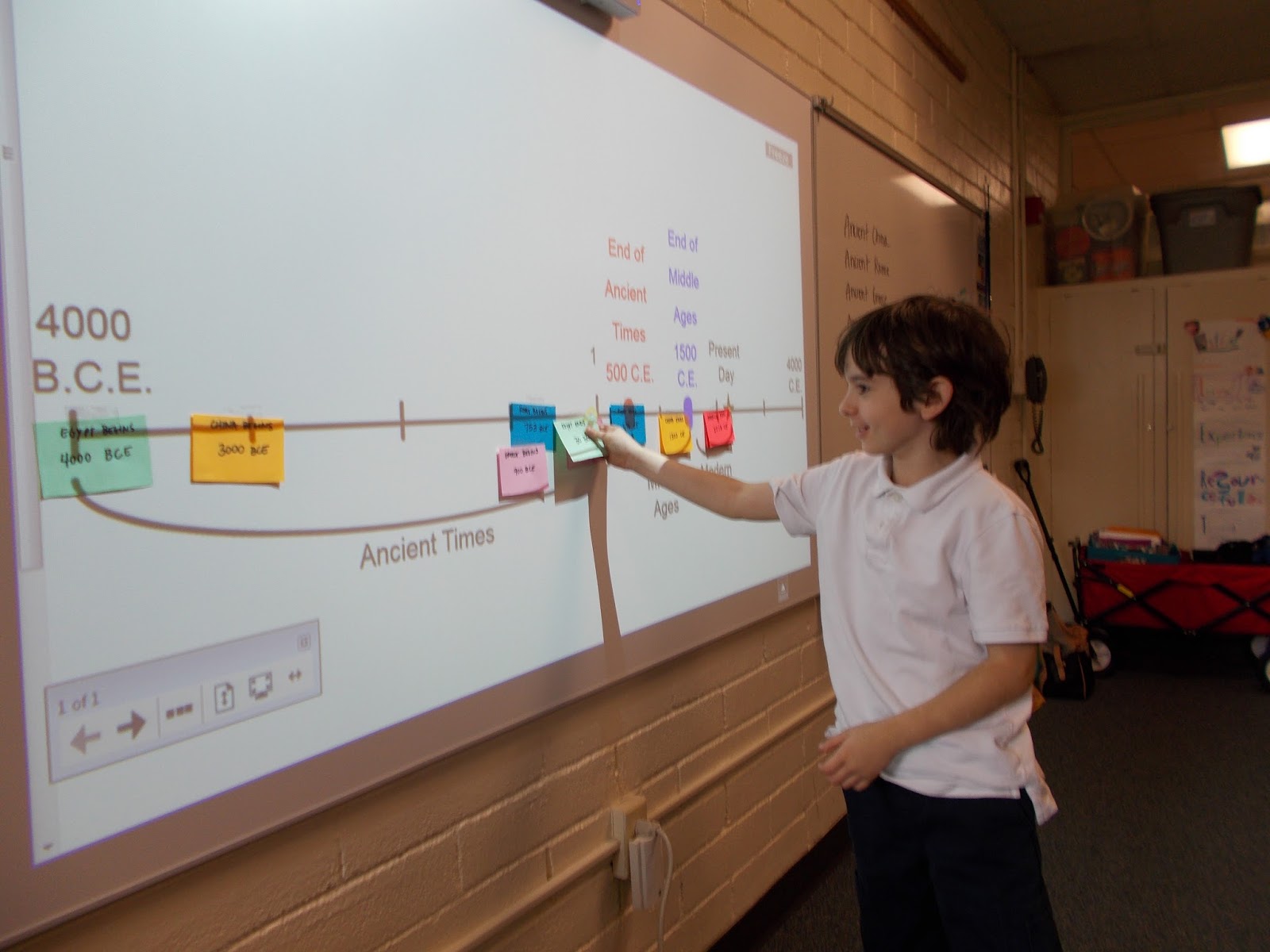
Springing from the cultural universals we discovered last week, students were able to act as time travelers stopping off at Ancient Egypt for a view of the pyramids, and then on to Ancient China to see the making of the terracotta warriors. Our next stop was Ancient Greece to walk through the columns of the Parthenon, and finally to Rome for a contest of gladiators in the Colosseum. Students rotated through our civilization stations to get a glimpse of each culture. They collected facts and stamped their passports as they selected the civilization that they would like to dig deeper into for their research project. As a class we looked at the where and when of each civilization and added them to our timeline. Students also got to explore online resources to help them make their final choice. Here are some links if they are interested in further exploration at home.
Ancient Civilizations Maps http://www.eduplace.com/
Ancient Egypt: http://www.ancientegypt.co.uk/ menu.html
Discover Ancient Egypt: http://www.nms.ac.uk/ex plore/games/discover-ancient- egypt/
Exploring Ancient China: http://www.hist oryforkids.net/ancient-china. html
Ancient Greece: http://www.bbc.co.uk/e ducation/topics/z87tn39
Guide to Ancient Greece: http://www.historyfork ids.net/ancient-greece.html
Discover Ancient Rome: http://www.historyforkid s.net/ancient-rome.html
Roman Empire: http://www.historyfork ids.net/ancient-rome.html
Subscribe to:
Posts (Atom)